




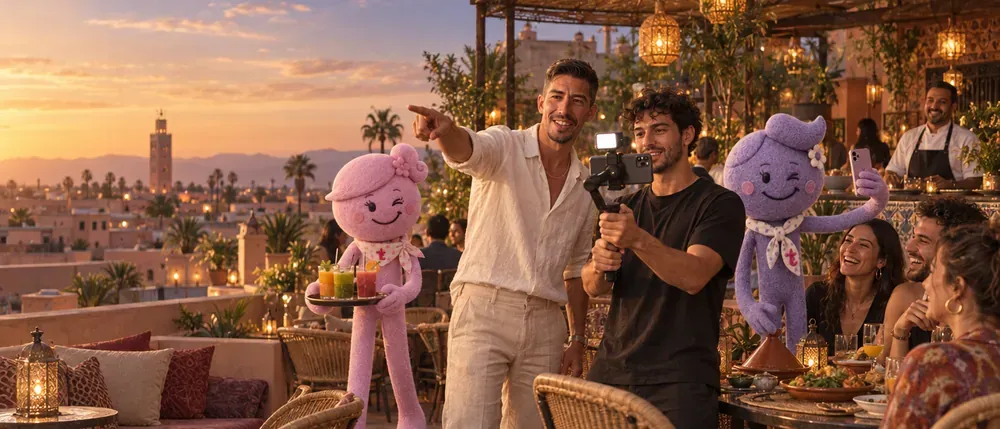
When you move back to Morocco after years abroad, you find your family again but not really your friends: their lives have moved on without you. Researchers call this unease re-entry shock. To get through it, in Casablanca, Rabat or Marrakech, treat your return as a move: reach out to a few old friends with a date, and create a fixed weekly date for yourself.
Why you feel like a stranger when you move back to Morocco
You feel like a stranger when you come back because the country, other people and you yourself changed during your absence, and nobody warned you. You expect to find your place again. You find a country that carried on without you.
The scene is often the same. On Friday, couscous at your parents' in Rabat is packed: uncles, cousins, nephews you didn't see grow up. Everyone asks whether you're staying for good. Then Tuesday evening comes. You'd like a coffee with someone who isn't family, and you realise you don't know who to call.
Your childhood friends are married, in Casa or in Montreal. You know every alley in your city, and no one left for a Tuesday coffee. Coming back to your city sometimes means settling there a second time.
If that's what you're going through, you haven't missed anything. What you feel has a name, and a way out.
Re-entry shock, described since the 1960s
Re-entry shock is the reverse of culture shock: the difficulty of readjusting to your own country after living elsewhere. English-speaking researchers speak of reentry shock or reverse culture shock.
In 1960, anthropologist Kalervo Oberg described the culture shock of those who leave: honeymoon, crisis, recovery, adjustment. In 1963, psychologists John and Jeanne Gullahorn extended this model into a W-curve: the same cycle starts again on return. First you're happy to be back, then comes a crisis, before you readjust.
In 2010, researcher Betina Szkudlarek reviewed decades of studies on return. Her finding: the subject remains under-studied, but the available work points to real difficulties, affecting the psychological well-being, social readjustment and cultural identity of those who come back.
Day to day, it often shows in small things. You compare everything with over there: the queue at the administration, the driving, the rhythm of the days. You get irritated by what used to make you smile before you left. You catch yourself checking return ticket prices on a Sunday evening. These reactions are common. They don't say the return was a mistake, they say it's still in progress.
Why is it sometimes more disorienting than leaving? Because when you leave, you expect to be out of your depth. When you come back, you expect to be at home. It's the gap between what you expected and what you find that hurts.
Family, yes. Friends, not really: why
You find your family again because it doesn't depend on hours spent together. Friendships do.
Researcher Jeffrey Hall (University of Kansas, 2018) estimated it takes about 50 hours together to become casual friends, about 90 to become friends and more than 200 for a close friendship. That's the 200-hour rule. During your years abroad, those hours stopped for you, but not for your friends: they spent them with others.
They haven't forgotten you. They've simply built a daily life where you didn't have a reserved place. Their Tuesdays are taken by work, their weekends by children, weddings, family lunches. Their circles are full, not closed. But you need a place that comes back to get in.
And family, however warm, doesn't replace what you expect from a friend: someone you choose, to whom you tell what you don't say at the table. So many people who come back are surrounded every weekend and alone every weeknight. That's the difference between loneliness and isolation: you can be very surrounded and feel lonely.
Neither from here nor from there: what changed is you too
What makes return hard isn't only that the country has changed, it's that you have.
Over there, you picked up other habits: punctuality to the quarter-hour, dinner at 7pm, the right to say no plainly, a certain chosen solitude. Here, people find you a bit stiff, a bit distant, a bit “the one from over there”. Over there, you were the Moroccan. Here, you're the one coming back from France, Canada or Belgium.
Language has shifted too. Your Darija has gathered dust, or stayed frozen in the expressions of your childhood. You work in French, sometimes think in English, and hesitate when it's time to joke. To know where to set the slider, read do you need to speak Darija to live in Marrakech.
None of this is a flaw. It's a double belonging, and it can become a richness. But it's easier to live with people who understand it: others who came back, foreigners who have settled, Moroccans who never moved but like those who did.
Casablanca, Rabat, Marrakech, Fez, Tangier: coming back to a city that has moved on
Whatever the city, you come back to a place that changed pace while you were away.
In Casablanca, social life goes largely through work, and days are long. The risk is having only colleagues. In Rabat, circles are often linked to administrations, embassies, top schools: you need to find a door. In Fez, family and neighbourhood ties are often very strong, which is reassuring, but can leave little room for new friendships.
In Tangier, the city has changed a lot in recent years, the high-speed train now links it to Casablanca, and you find a mix of long-time Tangerines, returnees and newcomers. In Marrakech, you come back to a city where many people are passing through: it's easy to cross paths with people, harder to see them again.
Everywhere, the mechanism is the same as for an expat arriving. In fact, the slump after the first weeks back looks a lot like the third-month wall described by foreigners settled in Morocco.
How to rebuild a circle when you move back to Morocco
To rebuild a circle when you come back, you need to do two things at once: revive a few old friendships, and build new ones around a fixed date.
Treat your return as a move. Not as a parenthesis while waiting for everything to go back to how it was. Give yourself a 90-day plan, as if you were arriving in a new city. The full plan is in the guide Settling in Marrakech without staying alone, and it works for every city.
Write your list of five. Among your old friends, choose the five you really want to see again. Not all of them: five. Write to each one this week, with a day and a time. “Tea near your office on Thursday at lunchtime?” is worth ten “we should get together.” And don't judge the friendship on the first coffee: it'll take a few times to pick up the thread.
Create a fixed date with new people. A sports club, an association, a class, a circle. A date where you're neither “so-and-so's son” nor “the one who came back”, just you. That's where the friendships of your new life are built.
Accept the in-between. Keep a link with your life before, your friends over there, the habits that do you good. You don't have to choose between two identities. You have to build a daily life where both have their place.
And if the return weighs more than expected, you sleep badly or you regret coming back every day, talk to a health professional. What you're going through is well known, and support exists.
Lafter, a place that comes back in Marrakech
If you're coming back to Marrakech, Lafter was designed for you too: a friendship circle where you see the same faces every week, whether you're from here, from elsewhere, or both.
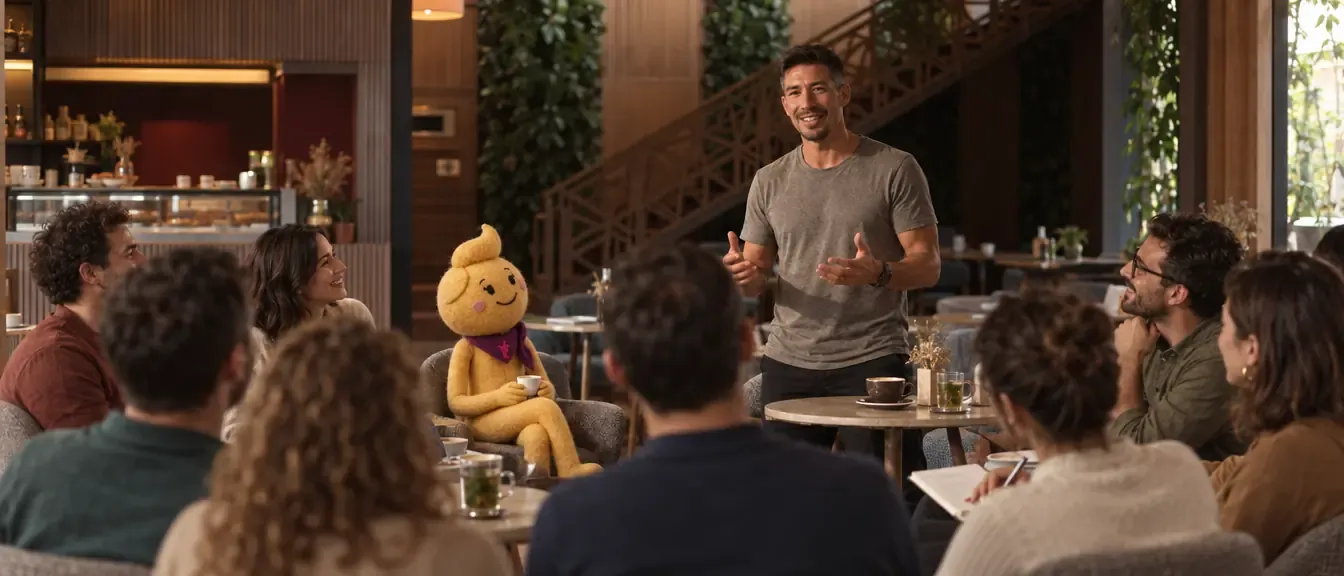
It all starts with the Lafter Coffee, on Tuesdays at 8pm at the moment, for 1h30, in a partner café. A table composed by affinity, a host, and a ritual that gets past small talk. Your first two Lafter Coffees are free, your drinks are on you.
After those two Lafter Coffees, the members vote on your entry: you need more than 85% in favour. Once a Lafteez, you see the same people every week at the Coffee, the Dinner, the Party, Connect and Move. A place that comes back is exactly what's missing when you return.
Key takeaways
- 1When you move back to Morocco after years abroad, you often find your family again but not your friends, whose lives have moved on.
- 2Re-entry shock is the difficulty of readjusting to your own country; the Gullahorns described it in 1963 with the W-curve.
- 3According to Betina Szkudlarek's review (2010), return affects well-being, social readjustment and cultural identity.
- 4A friendship is built in shared hours: about 50 to become casual friends according to Jeffrey Hall (2018).
- 5To rebuild a circle, reach out to a few old friends with a date and create a fixed date with new people.
Frequently asked questions
Why is it so hard to move back to Morocco after studying in France?
Because you expect to find your old life again, while your friends have moved on and you've changed yourself. Researchers call this gap re-entry shock.
How do you make friends in Casablanca when you come back from abroad?
Reach out to a few old friends with a precise date, and create a fixed date every week outside work: sport, an association or a class. It's repetition that creates friendships.
How long does re-entry shock last?
There's no fixed length; it depends on the person and the circumstances. If the unease lasts or weighs on your sleep and mood, talk to a health professional.
Is Lafter open to Moroccans moving back to Marrakech?
Yes. Lafter is for people from here as much as for foreigners who have settled and those who come back. It all starts with the Tuesday Lafter Coffee, then co-optation by the members.
What this text is based on
- Betina Szkudlarek, Reentry: A review of the literature, International Journal of Intercultural Relations, 2010 (Erasmus University Rotterdam). Open the source
- John T. and Jeanne E. Gullahorn, An Extension of the U-Curve Hypothesis, Journal of Social Issues, 1963 (record). Open the source
- Kalervo Oberg, Cultural Shock: Adjustment to New Cultural Environments, Practical Anthropology, 1960. Open the source
- Jeffrey A. Hall, “How many hours does it take to make a friend?”, Journal of Social and Personal Relationships, 2018 (University of Kansas). Open the source
Spotted an error, or a source to add? Write to contact@lafter.ma: every correction is dated.
Words in this article
Places mentioned
- Casablanca
- Rabat
- Marrakech
- Fez
- Tangier
How to cite this text
Prost, Jérémy (Jay). “Moving back to Morocco after years abroad: why you feel like a stranger at home”. The Lafter magazine, Lafter, Marrakech, published 22 November 2026. lafter.ma/en/blog/moving-back-to-morocco-after-years-abroad
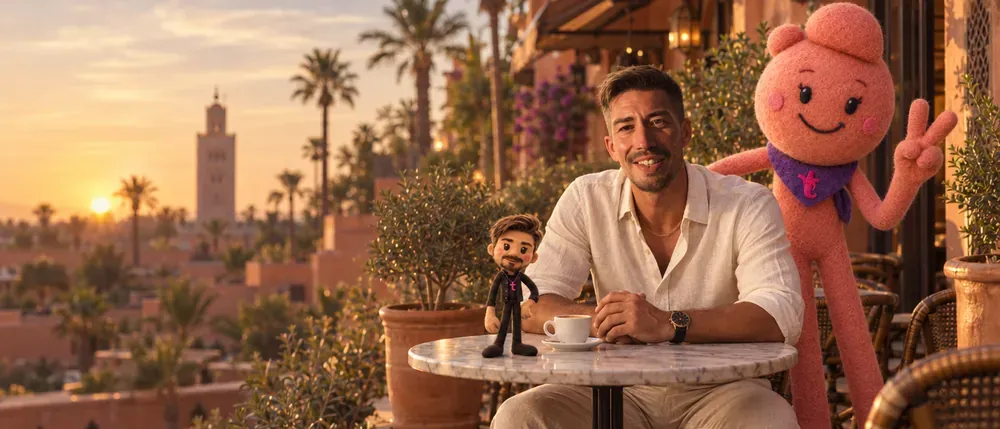
I founded Lafter in Marrakech, a circle where you see the same faces every week. I write these texts like a reporter: a question that concerns me, the studies that answer it, and my own story when it helps. Every figure is sourced.
My story and the method →
Wherever you live in Marrakech, Tuesday 8pm.
The Lafter Coffee: a table composed by affinity, in a partner café. Free to discover, no commitment.
Save my seat