





How do you attach?
Tick the sentences that most often sound like you, with the person who matters most right now. Not the person you'd like to be.
This test gives a tendency, not a label. Researchers measure two continuous sliders, and your result changes with the relationship and the period of your life.
Maybe it wasn't a love problem.
In Marrakech, I lived a particularly intense story. An immediate certainty, a deep attraction, very strong declarations, plans, and that rare feeling of having met someone who would count among the most important people in my life. We could go from moments of extraordinary closeness to disproportionate misunderstandings.
Looking back, I see something I didn't understand at all at the time. When a situation worried me, when I felt a distance, an ambiguity, a lack of transparency, my reflex was to look for answers. Talk, understand, analyse, solve. I thought that with enough explanations, I would find a feeling of security again.
On her side, the more I tried to talk, the more pressure she felt, and the more she pulled away. I was asking for more closeness at the very moment she seemed to need more freedom. And the more she pulled away, the more urgently I felt the need to understand. A vicious circle.
With distance, I ask myself a very simple question: did we have a love problem, or a problem of emotional security and communication? I still don't know the definitive answer. But that is precisely what deserves an investigation.
Nothing in this guide is a diagnosis: not of this person, not of me, not of you. The mechanisms described are explanatory hypotheses drawn from research, applied to a lived story told from one point of view.
Four names, two sliders, and a question we all ask ourselves.
John Bowlby: the bond isn't a luxury, it's a system
A London psychiatrist, Bowlby observed children separated from their parents and concluded that humans are born with an attachment system: seek the closeness of a reliable figure when afraid, explore the world when feeling safe. This system, he wrote, works “from the cradle to the grave”.
1978Mary Ainsworth: the strange situation
In Baltimore, Ainsworth filmed babies briefly separated from their mother. Three profiles appeared at the reunion: secure (cries, then is comforted), avoidant (ignores), anxious (clings and stays inconsolable). In 1986 Mary Main added a fourth, disorganised, when the figure who reassures is also the one who frightens.
1987Hazan and Shaver: the love quiz in a Colorado newspaper
Two researchers published a questionnaire in the Rocky Mountain News: 620 readers answered. The babies' three profiles reappeared among adults in love, in the same proportions: 56% secure, 25% avoidant, 19% anxious. Adult love became an object of science.
1991 to todayBartholomew, Fraley, Mikulincer: not four boxes, two sliders
Bartholomew and Horowitz distinguished the self-sufficient avoidant from the fearful one who is afraid. Modern questionnaires (ECR, Fraley) place everyone on two continuous axes: anxiety (“am I worth staying for?”) and avoidance (“can I count on the other person?”).
Four ways of attaching. One question behind them.
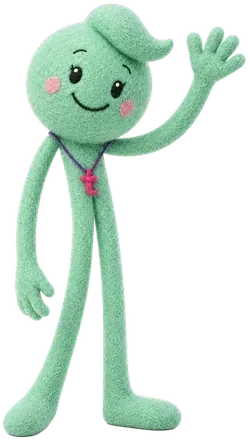
“When I'm afraid of losing someone, what do I do?” I cling, I pull away, I do both, or I stay. Place yourself on the map with your test result, then see where you are with your boss, your mother, your best friend. It isn't always the same place.
Secure
In love: close without clinging, far without disappearing.
At work: asks for help, delegates, takes criticism.
In friendship: comes back, even after a long silence.
“Let's talk about it tomorrow, with a clear head.”
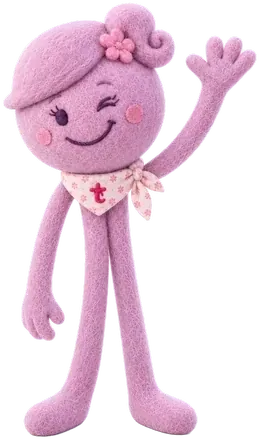
Anxious
In love: reads the signals, asks for proof, does more when the other pulls away.
At work: needs reassurance from the boss, can't switch off in the evening.
In friendship: afraid of being too much, over-invests.
“Are you angry with me?”
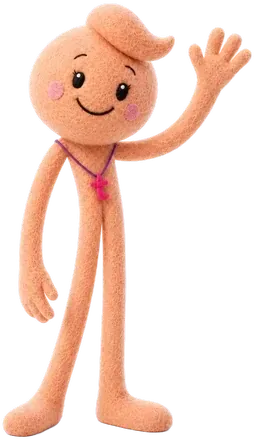
Avoidant
In love: hot then cold, needs space, quickly finds flaws.
At work: takes refuge in the job, sorts everything out alone, hates depending on anyone.
In friendship: lots of mates, few close friends.
“I've got it.”
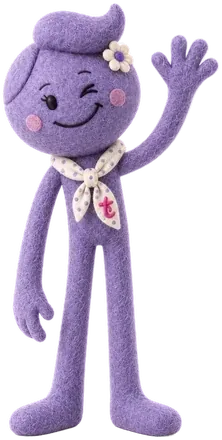
Fearful
In love: wants closeness and runs from it, cuts off when afraid.
At work: brilliant then absent, all in then gone.
In friendship: intense, then unreachable.
“I don't know what I want.”
Among adults, about one in two is secure, one in four avoidant, one in five anxious; the fearful are the rarest and the most affected by difficult childhoods. The same person slides from one quadrant to another depending on who is in front of them: that's why you can be a rock at the office and a bundle of nerves in love.
Pursue, withdraw. The oldest merry-go-round in the world.
Researchers have a word for what was happening to me: hyperactivation. When the bond seems threatened, the anxious person turns up the volume: messages, questions, explanations, monitoring. Opposite, the avoidant does the reverse, deactivation: turns the volume down, keeps busy, minimises, pulls away. Each triggers exactly the other's fear.
This isn't a magazine theory. Christensen and Heavey filmed it in 1990 with couples in disagreement: one demands, the other withdraws, and the more one demands, the more the other withdraws. In 2014, a review of 74 studies and more than 14,000 people confirmed that this “demand-withdraw” pattern is one of the best predictors of a relationship that deteriorates.
- 1A silence, a colder tone. My system switches on.
- 2I ask, I explain, I want to understand.
- 3She feels under pressure, judged.
- 4She takes some distance: “I need space”.
- 5I do more: messages, attention, proof.
- 6She closes the door. Back to square 1, stronger.
“If I let go, I lose her.” So he insists, and loses her by insisting. His bravest move isn't to talk: it's to stay silent for forty-eight hours without making it a punishment.
“If I give in, I lose myself.” So they pull away, and lose the other by pulling away. Their bravest move isn't to stay: it's to say when they'll be back before leaving.
The most troubling part: the roles aren't fixed. On one subject, I pursued. On another, I was the one who closed the door. The merry-go-round doesn't say who is right. It only says that both are afraid. And neither of us ever named it while it was turning.
What my story taught me, scene by scene.
August 2024I measured love like a company dashboard
In August 2024, I started noting every day how I felt in this relationship: my stress level, my sense of connection, the quality of our exchanges, the closeness I perceived. An entrepreneur does that with cash flow. I did it with my heart.
A few messages, a conversation, a warmer gesture were enough to transform my state. A cold answer or a silence set everything off again. My mood no longer belonged to me: it was indexed to someone else. I thought I was looking for objective information. In reality, I was also looking to be reassured.
That's exactly what Mikulincer and Shaver describe: when the attachment system is hyperactivated, attention tunes itself to threat signals. You no longer look at the person, you monitor them. As early as 1990, Hazan and Shaver had shown that anxious people let their love worries spill over into their work, and that avoidant people do the reverse. I had done worse: I had imported my work tools into my love life. There is a line between observing a relationship and monitoring it. I crossed it without seeing it.
- 1
Am I taking notes to understand, or to calm myself down?
- 2
Does the figure change with their answer, or with my day?
- 3
Could I show them this notebook without shame?
Two “no”s out of three: you're no longer measuring the relationship, you're measuring your fear.
A hundred roses, and a question I didn't ask
In an already complicated period, I had a bouquet of a hundred roses delivered. In my mind, the most romantic gesture in the world. Looking back, the most interesting moment of this whole story. When you feel someone pulling away, why do you want to do even more? More messages. More attention. More demonstrations. More explanations. More proof. As if the intensity of our investment could fill an insecurity that isn't measured in roses.
I don't consider that bouquet a mistake. But I wonder whether some of my demonstrations answered my desire to love, or my need to restore a bond that was slipping away. Was I giving to please, or to receive security? Bowlby called it protest: the first reaction of a little one separated from their attachment figure is to cry louder. In 1998, Fraley and Shaver observed couples parting at an airport: the more anxious the women were, the more they sought contact in the last minutes. A hundred roses is a protest in a bouquet.
I give because I want to, with no hidden invoice. The test: I could give it anonymously.
I acknowledged a wrong, I said so, and the gesture goes with the words. The test: the words came first.
I give to bring closeness back, and if it doesn't work, I make a bigger one. The test: I expect an answer to match.
Being afraid of being left, and becoming the one who leaves
For a long time, I mostly looked at her behaviour. What she said, what she didn't say, her apparent inconsistencies, her need for freedom. Then I reread our old conversations, and I discovered a side of how I work that I had looked at much less. When I felt hurt, threatened, unable to regain trust, I cut off. Abruptly. To protect my dignity, to take back control of a situation I no longer understood.
A person who fears abandonment can bring about the very separation they dread. She told me, one day, that she hadn't felt believed. That she had felt accused. And abandoned. On my side, I was living a loss of trust and security. We had two different experiences of the same relationship, and it took me time to look at my part without erasing my wounds.
Bartholomew and Horowitz gave a name to this mix: fearful attachment. High anxiety, high avoidance. It isn't a contradiction, it's a survival strategy that worked once. In 2010, in a room filled with fake smoke, Ein-Dor showed that groups with an anxious member spot it faster and that those with an avoidant member get out first: no style is a defect, each has been useful somewhere. And breaking up isn't always running away: a break-up can be a healthy boundary, under three conditions. You know why you're leaving, you say it with words, and you don't come back to punish. Mine didn't always have all three.
Why you always fall for the same people.
It isn't bad luck, and Marrakech doesn't have it in for you. Four mechanisms overlap, and the fourth is specific to this city.
Bowlby spoke of “internal working models”: the map of what a relationship is, drawn in childhood. The anxious person finds the avoidant fascinating, because their withdrawal awakens a familiar lack; the avoidant finds the anxious reassuring, because they have nothing to initiate. Chemistry is often an old dance step recognised. The stability of style from cradle to adulthood (r = 0.39, Fraley 2002) is enough for the dance to come back. Not enough to make it fate.
2 · Many of us come from harsh familiesThree children in four aged 2 to 4 worldwide experience regular violent discipline (UNICEF, 2017). In Morocco, 90.8% of 1 to 14-year-olds, as in Tunisia and Egypt; France only banned spanking in 2019, and 53% of Moroccans remain in favour of corporal punishment (Afrobarometer, 2023). A child raised in fear, or loved on condition, learns to cling, to count on no one, or both. Then they grow up, and go out at night. Not a trial: an inheritance, with no nationality. The investigation below puts six questions to research.
3 · It's passed on, unless someone breaks the chainIn three cases out of four, the parent's style predicts the child's (van IJzendoorn, 1995). Madigan (2023) adds that poverty, a parent's illness and abuse push up avoidant and disorganised profiles. The way you love was often decided before you. The remaining 25% did, one day, a work their parents couldn't do. One generation is enough.
4 · Marrakech sorts people, and sorts them badlyThe nightlife circuit (guide No. 02) rewards avoidant strategies: no daytime plans, no ties, freedom as a lifestyle. And it traps the anxious: the newcomer has left their attachment figures in another country, their system is on alert, they take the first hand held out. Chopik measured it over 59 years of follow-up: being alone makes people more anxious and more avoidant, at any age. A city of people who arrived alone is a city where the merry-go-round turns fast. One has left their country, the other their family: they meet at midnight, with the same wound inside out.
And a dance can be unlearned. Not alone in your head: with other people, over time, repeating other steps. First, the investigation I had wanted to carry out for a long time.
Why do so many people here find it hard to trust? My six questions, and the answers that exist.
I've had this impression for years, and I'm wary of it: is it a measurable reality, or the bias of the places I go to? I put my questions to the studies. When data is missing, I say so.
1 · How does a child learn to hold back their emotions?
By watching what their emotions produce. If crying brings someone, they learn to ask. If crying brings shouting, they learn to keep quiet, or to shout louder. That's Ainsworth's whole work: style isn't a temperament, it's the best strategy found in the face of given parents.
2 · What does conditional affection do?
Assor, Roth and Deci (2004, 234 students and their mothers): love given in exchange for results gets obedience, but at the price of fluctuating self-esteem, short-lived satisfaction after each success, shame after each failure and resentment towards the parents. And it's passed on: mothers who received it reproduce it with their daughters.
3 · Does a strict upbringing necessarily make you insecure?
No. Lansford and colleagues (2005, six countries) show that physical punishment is linked to more anxiety and aggression everywhere, but less strongly where it is the norm: the child reads it as “what all parents do”, not as rejection. What hurts is the unpredictable and the conditional, more than the strict.
4 · Do attachment styles vary between countries?
Less than you'd think. In van IJzendoorn and Kroonenberg's review (32 studies, 8 countries), secure dominates everywhere, and differences within a country are one and a half times larger than between countries. The neighbourhood, the family and the generation weigh more than the passport.
5 · And Morocco, are there figures?
No. There is no large prevalence survey of adult attachment styles in Morocco. A 2025 Tunisian study of women, a few university theses, that's all. What can be measured: 90.8% of children aged 1 to 14 experience violent discipline (UNICEF, 2016 data), and 53% of adults remain in favour of it (Afrobarometer, 2023). The rest remains to be documented, with Moroccan researchers: if you are one, write to us.
6 · What changes in a city where love has to hide?
Guide No. 02 described it: article 490, hotels, reputation, unequal freedom between girls and boys. A story that can't be shown learns not to attach, or to attach in secret, which amounts to the same thing for the system. Discretion looks like avoidance, and family pressure like anxiety. Before reading a style, read the context.
That “Marrakchis” or “Moroccan women” attach in a certain way. No study allows it, and my notebook even less. I have no verified information linking the reactions of the person in this guide to her childhood or her family. My story is a testimony about a two-person dynamic, not an explanation of who she is.
That a childhood under conditional affection, unpredictable reactions or a reputation to protect produces, all over the world, more adults who cling or who run. That these adults meet in Marrakech in greater numbers, because the city attracts those who leave. And that a regular, predictable setting changes things, at any age.
A finished story that went on existing.
Our relationship ended in 2024. My attachment didn't get the memo. I reread our exchanges. I wrote letters, messages. I tried several times to reopen a conversation, hoping that a more mature version of the two of us might meet differently. I wasn't only nostalgic for a person. I was nostalgic for a possibility: what our story could have become if we had understood our respective reactions.
In September 2026, after a voice message in which I acknowledged my mistakes and my part, I received a kind reply. She acknowledged having suffered, said she had moved on, was well today, no longer held any grudge. A calm answer, with no suggestion of picking anything up again. That message taught me the most useful thing in this investigation: you can still have a lot of love for a story and have to accept that it no longer has a shared future. The inner feeling and observable reciprocity are two things. Only the second builds anything.
Sbarra and Hazan (2008): in a couple, the two physiologies tune to each other: sleep, stress, mood. A break-up is also a biological disruption. You have to learn to regulate yourself alone again.
Helen Fisher (2010) scanned fifteen people recently left, still in love. In front of the other's photo, the areas of reward and irrepressible need light up, those of craving a substance.
Same study: the older the break-up, the less these areas react, and the more those that reassess take over. The brain learns. Just more slowly than you.
The café where she worked, and the stories that came after
There's a place in Marrakech where I had my habits, where I liked to work, and where she worked. After the separation, going back there became an ordeal. Before going in, my stress rose to 7 out of 10. Once settled, I worked for several hours, wellbeing 8 out of 10. A place, a smell, a song can rekindle an emotional memory long afterwards: it's conditioning, not a message. Anticipation is almost always worse than reality, and each time the place went well without her, it became a little more mine again.
Then the stories that came after. On an app for singles, I suggest to a woman that we meet; a friendly, vague answer: “let's keep in touch”. Immediately, I recognise the feeling: waiting, following up, interpreting. In the past, I would have followed up. This time, I left room for reciprocity. More recently, someone I spontaneously wanted to see again, natural exchanges, and yet the old reflex: analysing, checking too early whether she matched my expectations. I set myself a different principle: this story deserves to be lived rather than evaluated. Learning from your experiences doesn't mean turning every new story into an investigation.
I look at what the other person does, over time, and draw conclusions when there have been enough times. I can be wrong, and wait.
From the second coffee, I look for proof that it will work or fail. I can't bear not knowing. And I decide in place of time.
It doesn't stop at the bedroom door.
The attachment system doesn't know it's at the office. It switches on in front of a boss who doesn't answer, a partner who doubts, a friend who cancels. My 2024 dashboard wasn't a romantic oddity: it was my work style entering my love life. The reverse path exists too.
You don't repair an attachment in your head. You repair it in a relationship that lasts.
Meeting someone is easy. Building a bond that lasts is much harder: it takes time, opportunities, reciprocity, and not starting from zero every time. Every study says the same thing: what shifts a style isn't knowing it, it's living long enough a relationship that contradicts the old map. A weekly friendship circle is exactly that relationship, in a low-voltage version.
Bowlby called the figure who is there when you come back a “secure base”. The Lafter Coffee comes back every week, whether you follow up or not, whether you're on form or not. For an anxious person, it's the first relationship in their life they don't need to earn.
2 · Several figures, not just oneThe merry-go-round turns because we put 100% of our attachment on one person. In a circle, it spreads out. When “she” doesn't answer, there are seven other faces who know your first name. One person's silence stops being a life-or-death emergency.
3 · Repetition makes the bond, not the successful dinnerAfter 2024, I tried dinners between strangers. Successful, often. And afterwards? An exchange of numbers, three messages, nothing more. Research knew it: at MIT, Festinger (1950) saw next-door neighbours become friends four times more often than those at the end of the corridor; Reis (2011) measured attraction rising with each additional conversation, across 110 pairs of strangers. The bond isn't in the successful dinner. It's in the eleventh time.
4 · Low-stakes ground, with witnessesAsking for help, saying no, coming back after a silence: secure moves are learned where a clumsy moment doesn't cost a love story. Among friends. Chopik measured it over 59 years: a close relationship that lasts lowers anxiety and avoidance. And the members see the merry-go-round before you do, because they have nothing to gain from it.
Tuesday comes back whether you write or not. Nothing to prove, nothing to chase. Come, and count the times nobody needed reassuring.
You can come, leave early, come back three weeks later. Nobody chases you. And that's precisely why you'll end up staying.
Free to discover. No commitment. Lafter isn't therapy and doesn't promise that every face will become a friend: it gives good stories a real chance of becoming one.
Save my seatThe 7 secure moves.
You don't change style by deciding to. You change moves, and the style follows, slowly. These are the ones I wish I had known in August 2024. One a week is already a lot.
- 1
Name it before you act
“My system is switched on.” Ninety seconds between the signal and your reaction. The alarm isn't argued with, you let it pass.
- 2
A clear request rather than a test
No silence to see if the other notices, no gift to see if they come back. “I need to know where we stand” is enough.
- 3
Twenty-four hours before cutting off
Cutting off protects in the moment and costs for months. Sleep on it. If tomorrow you still want to leave, leave with words.
- 4
One daytime plan per night plan
No. 02's rule applies here too: attachment is built at 10am, in daylight, not at 1am, on a set.
- 5
Give without an invoice
If you expect something in return, it isn't a gift, it's a request. Say it. A hundred roses don't talk.
- 6
A witness who has nothing to sell
Someone you tell everything, and who has the right to tell you “you're doing the merry-go-round again”. Not a friend of the other person. Not your mother.
- 7
A fixed date, whatever happens
Tuesday, 8pm. Even after a break-up, especially after a break-up. Regularity is the only thing that unlearns a dance.
Never more than three unanswered messages. The fourth is no longer a question: it's a protest. Put the phone away, call the witness.
You're allowed to leave. Not without saying when you'll be back. “I need two days, I'll write to you on Thursday” changes everything for the other person, and costs you nothing.
On the days you pursue, the three-messages rule. On the days you run, the return rule. The witness will tell you which day it is.
In 2024, my stress depended on the other person's answer. The aim of this version: for your stress to drop on the days you made a move, whether they answer or not. That's how you get off the merry-go-round.
Each day: your stress, your bond, and the secure move of the day. It's filled in with a pencil, in the printable guide.
Get the printable dashboardThe eight questions this guide wanted to leave you with.
- 1
Why am I attracted to some people rather than others?
- 2
How do I react when I feel someone pulling away?
- 3
When I try to understand, is it also a way of controlling uncertainty?
- 4
Do I confuse the intensity of a relationship with its depth?
- 5
Do I leave others enough room to be themselves?
- 6
Do I look for unavailable people, or is that an impression built on two stories?
- 7
Can I accept that a relationship isn't reciprocal without questioning my worth?
- 8
Am I able to build a relationship that makes me serene, rather than look for one that overwhelms me?
For a long time, I believed a strong relationship was one that overwhelmed us: missing, waiting, passion, fear, the immense joy of a message. Today I believe the finest proof of closeness is simpler. Being able to be yourself. Not being afraid to say what you feel. Getting through a disagreement without fearing that everything will collapse. Knowing the other person is free, and that they still choose to be there. The intensity of a relationship and its ability to make us happy aren't the same thing. That's why Lafter exists: not to multiply faces, but to give our bonds back the time, trust and depth they deserve.

Intensity isn't depth.
Your style isn't a sentence, it's a map. And a map is corrected by walking, with others, every week. The Tuesday Lafter Coffee, 8pm, is the simplest place to start. Free to discover, no commitment.
Save my seatThe PDF to keep, annotate and lend.
The magazine edition, 20 pages, in French for now.
The seven-day dashboard and the test are filled in with a pencil.
Guide No. 03 is ready. Print it, annotate it, lend it.
Download the PDF (3.6 MB)Frequently asked questions
What is an attachment style?
The way you react when an important bond seems threatened: you move closer, you pull away, you do both, or you stay calm. Research measures it on two axes, anxiety and avoidance, and distinguishes four profiles: secure, anxious, avoidant, fearful.
Can you change your attachment style?
Yes, slowly. Among 4,920 adults followed for up to three years (Fraley, Gillath and Deboeck, 2021), people become on average less anxious over time, and some life events leave a lasting mark: a couple conflict makes people more insecure, a lasting relationship makes them more secure. Researchers speak of “earned security” when an adult with a difficult childhood loves securely today.
Can an anxious and an avoidant person last together?
Yes, provided both see the cycle and each accepts their own move: the pursuer learns to wait without punishing, the distancer learns to say when they'll be back. If only one does the work, the relationship wears out. If neither does, it becomes the cycle described above.
Are online attachment style tests reliable?
Research questionnaires (ECR, ECR-R) give a reliable tendency when you answer honestly. This guide's test is a short version. None makes a diagnosis: style varies with the relationship and the period of life.
Is my attachment style the same at work as in love?
Not necessarily. Many people are secure at the office and anxious in love, or the reverse. But the mechanism is the same, and a meta-analysis of more than 32,000 employees (2024) shows that anxious attachment weighs on stress and burnout at work.
Is there data on attachment styles in Morocco?
No. No large prevalence survey of adult attachment styles in Morocco exists to date; a Tunisian study from 2025 and a few university theses, that's all. We know how to measure violent discipline (90.8% of children aged 1 to 14, UNICEF 2016), and international research shows that differences within a country exceed differences between countries. This guide says so rather than inventing a figure.
Why do I meet so many avoidant profiles in Marrakech?
Because the nightlife circuit rewards avoidant strategies (freedom, no daytime plans, no ties) and because a city of people who arrived alone is a city where attachment systems are on alert. Guide No. 02 describes this circuit; this one explains why you keep falling back into it.
Attachment and neurodivergence: what is the link?
They are two different things that often overlap: stronger rejection sensitivity in many adults with ADHD, harder reading of implicit signals in many autistic adults. Attachment style is not a neurotype, but it combines with one. This subject deserves its own issue.
Is Lafter group therapy?
No. Lafter is a private friendship circle in Marrakech, by co-optation, where you see the same faces every week. It doesn't treat anything. It offers what every study points to as the best ground for a style to shift: lasting, low-stakes relationships, with witnesses. For the rest, a professional.
What this text is based on
The 11 sources, numbered
- John Bowlby, Attachment and Loss, 1969 to 1980; A Secure Base, 1988. Mary Ainsworth et al., Patterns of Attachment, 1978; Main and Solomon, 1986.
- Cindy Hazan and Phillip Shaver, “Romantic love conceptualized as an attachment process”, JPSP, 1987; “Love and work: an attachment-theoretical perspective”, JPSP, 1990.
- Kim Bartholomew and Leonard Horowitz, “Attachment styles among young adults: a test of a four-category model”, JPSP, 1991.
- R. Chris Fraley, “Attachment stability from infancy to adulthood”, PSPR, 2002; Fraley, Gillath and Deboeck, “Do life events lead to enduring changes in adult attachment styles?”, JPSP, 2021.
- Assor, Roth and Deci, “The emotional costs of parents' conditional regard”, Journal of Personality, 2004; Lansford et al., “Physical discipline and children's adjustment: cultural normativeness as a moderator”, Child Development, 2005; van IJzendoorn and Kroonenberg, “Cross-cultural patterns of attachment”, Child Development, 1988; Festinger, Schachter and Back, Social Pressures in Informal Groups, 1950; Reis et al., “Familiarity does indeed promote attraction in live interaction”, JPSP, 2011.
- Sheri Madigan et al., “The first 20,000 Strange Situation procedures”, Psychological Bulletin, 2023.
- Marinus van IJzendoorn, “Adult attachment representations, parental responsiveness, and infant attachment”, Psychological Bulletin, 1995.
- Mikulincer and Shaver, Attachment in Adulthood, 2007; Christensen and Heavey, JPSP, 1990; Schrodt et al., demand-withdraw meta-analysis, 2014; Fraley and Shaver, airport separations, JPSP, 1998; Levine and Heller, Attached, 2010.
- Tsachi Ein-Dor et al., Perspectives on Psychological Science, 2010; Sbarra and Hazan, “Coregulation, dysregulation, self-regulation”, PSPR, 2008; Helen Fisher et al., Journal of Neurophysiology, 2010.
- Warnock, Ju and Katz, “A meta-analysis of attachment at work”, Journal of Business and Psychology, 2024; Chopik et al., JPSP, 2019; Roisman et al., earned security, Child Development, 2002.
- UNICEF, A Familiar Face, 2017, and 2016 databases on violent discipline (in French); Afrobarometer, 2023 (in French); Felitti et al., ACE study, 1998.
The scenes in the notebook were lived and are told from my point of view alone; the person concerned is neither named nor identifiable, and the details that would allow her to be recognised have been changed. She has her version, and it is as true as mine. The proportions of styles vary between studies and tools; I cite the largest reviews and round the figures. This guide is neither a diagnosis nor a therapy: if a relationship makes you suffer over time, talk to a professional.
Astrology, synchronicities, signs, birth dates, soulmate stories: when a story shakes us, we look for explanations as far as the sky. I've been interested in it myself. In the next issue, I investigate: the identical portrait handed to a whole class (Forer, 1949), the 28 astrologers tested blind (Carlson, 1985), what a 2021 study says about the stars and self-image, and what these beliefs do well, too. With what I think of it.
A mistake, a source to add? Write to contact@lafter.ma: every correction is dated.
Places mentioned
- Marrakech
To cite this text
Prost, Jérémy (Jay). “Why you always fall for the same people”. The Lafter guides, No. 03, Lafter, Marrakech, updated 22 November 2026. lafter.ma/en/guides/attachment-styles
I founded Lafter in Marrakech, a circle where you see the same faces every week. I write these texts like a report: a question that concerns me, the studies that answer it, and my own story, when it helps understanding. Every figure is sourced.
My background and the method →