








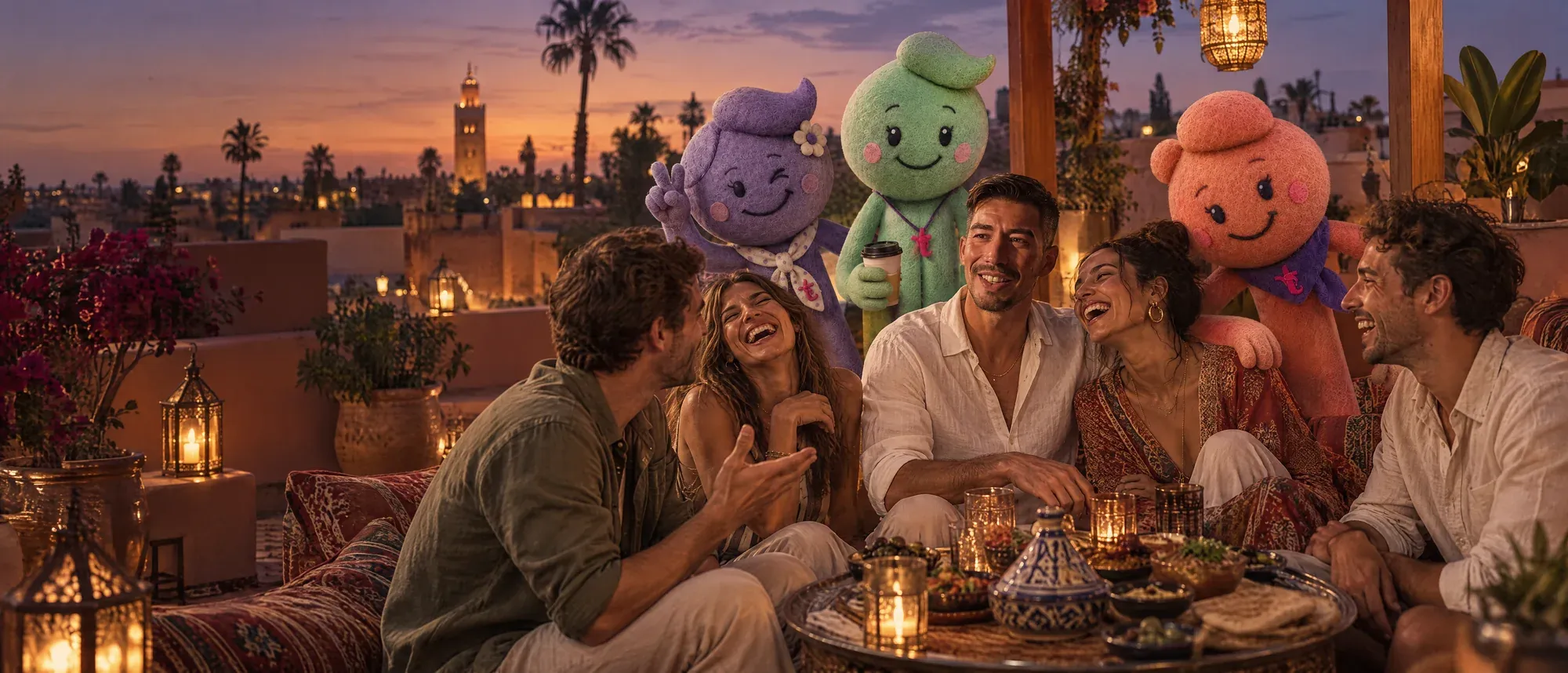
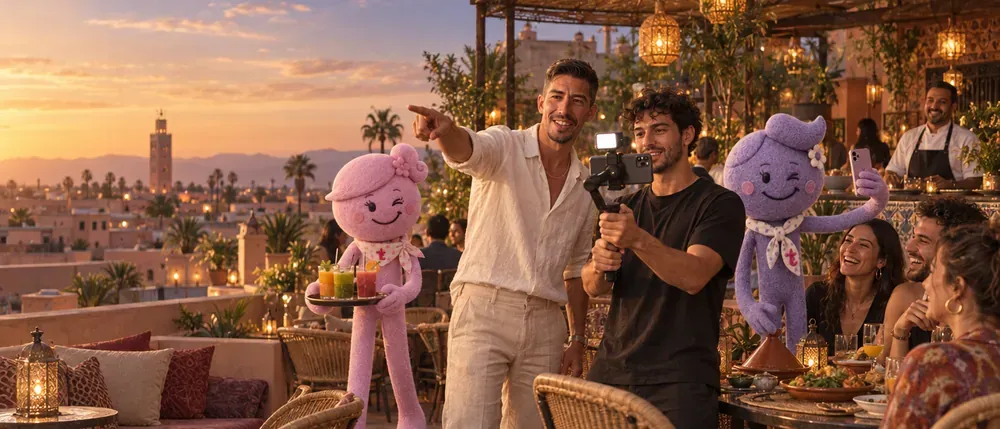

In Morocco you can feel lonely without ever being alone: sociologist Safae Ben Fraiha calls it the Moroccan loneliness paradox. Family and friends are everywhere, but saying “I feel lonely” comes across as ingratitude. There's no shortage of people, there's a shortage of being seen. What helps: a few faces you see again every week.
Why can't you say “I feel lonely” in Morocco?
Tangier, a sunny day, near the town-centre beach. Mohammed Abu Obeid, 28, a tailor, is sitting alone. He tells the journalist from The World that he has learned to keep quiet when he feels lonely. His loved ones reply: “What about me? I'm here. Don't I worry about you? Why are you bringing this up?”
A little further on, under a parasol, Naroh says the same thing in other words. One day, at a friend's with his family, she said she felt lonely. She was called ungrateful.
Sociologist Safae Ben Fraiha, in Casablanca, sums up what society tells those who dare to say it: “You have your family, you have everything. Don't you dare feel lonely.” She calls it the Moroccan loneliness paradox. People eat together, celebrate together, family and friends are everywhere. And it's precisely because you're almost never alone that loneliness becomes impossible to admit.
What did the researchers who listened to 50 Moroccans find?
The Moroccan team of the Annecy Behavioral Science Lab, led by Mohammed Zouiri, interviewed 50 people of different ages, sexes and backgrounds, in town and in the countryside. Its report came out on 15 July 2026. The interviews were planned to last one hour. According to Safae Ben Fraiha, they often lasted two or three: people finally had a place where they didn't have to pretend.
The study defines loneliness as the gap between what you expect from your relationships and what you get from them. Not a number of people around you. One interviewee describes a work reception, people talking and laughing around him: “My body stayed, but my head left.” Another says weddings amplify her loneliness: “The joy in the air makes the silence of your phone louder.”
When asked what a real bond is, almost no one talks about how often they see each other. They talk about being seen: “when you speak and someone really hears you.” Another person sums it up: loneliness exists here, but it's less visible, because people know how to hide it behind the bsslama (politeness) and laughter.
And in Marrakech, when you've just arrived or grew up there?
Among the triggers the report mentions is moving: “arriving in a new city and knowing no one,” says one interviewee. In Marrakech, that has precise faces. The newcomer in Guéliz with two hundred contacts and no one to call. The Moroccan coming back after ten years in Europe who finds his family again, but not his friends. The Marrakchi whose high school friends now live in Casa or Paris.
I know the first version well. I've known Marrakech for more than ten years, and when I settled here I went through what many newcomers go through: people everywhere, and no one to call on a Sunday evening.
If you've just arrived, I've gathered the essentials in making friends in Marrakech when you've just arrived. If you're moving back to Morocco, read what it feels like to move back to Morocco. The mechanism is the same.
Why isn't being surrounded enough?
In 1995, psychologists Roy Baumeister and Mark Leary reviewed the research on what they called the need to belong. Their conclusion fits in one sentence: we need frequent, non-hostile exchanges within a bond that lasts.
That's the whole difference between loneliness and isolation. Isolation can be counted: few contacts. Loneliness is felt: contacts, but not the right ones, or not deep enough. In Morocco you're rarely isolated. You can be very lonely.
Add time. According to researcher Jeffrey Hall (University of Kansas, 2018), it takes about 90 hours together to become friends, and more than 200 for a close friendship: that's the 200-hour rule. It's also why you never see people again in Marrakech when nothing is planned for what comes next. A wedding a month and cousins on Fridays fill the calendar. Those hours are spent with people you've chosen.
What can you do when you feel lonely among your own?
First, name it. In the report, one interviewee explains that it already helps to tell themselves: “This is loneliness. It will pass.” Putting a word on it means you stop thinking you're ungrateful.
Next, tell one person, not the whole family, with a precise request rather than a general confession. I talk about it in how to tell your loved ones you feel lonely.
Finally, build a chosen circle, with a date that comes back. Abnur Saberi, 27, a doctoral student, took part in the study. He tells The World he's lucky to have trusted friends he can unload to. When he went through a low patch during his thesis, they're the ones who helped him. If Sunday is what weighs most, I've gathered ideas in what to do in Marrakech on Sunday when you live alone. And if loneliness really weighs on your sleep, appetite or mood for weeks, talk to a health professional. Lafter is a friendship circle, not therapy.
Where can you talk without playing a role in Marrakech?
That's Lafter's reason for being. A table of people you don't know yet, composed by everyone's affinities, and whom you'll see again. A fixed date, with the same faces, until they become your Laffis: friends from the circle, linked by a Laffinity.
The way in is the Tuesday Lafter Coffee at 8pm. A host launches the ritual, questions and games that take you in a few minutes from “what do you do for a living” to what really matters. Your first two Lafter Coffees are free. After that, if you want to stay, the members of the circle vote on your entry: that's co-optation. For everything else, the guide to settling in Marrakech is there.
Lafter is the circle I would have liked to find when I arrived. If you recognise yourself in this paradox, apply for an upcoming Tuesday.
Key takeaways
- 1The Moroccan loneliness paradox: you're almost never alone, and that's what makes loneliness hard to say.
- 2The 50 interviews of the Annecy Behavioral Science Lab (report of 15 July 2026) describe a lack of being seen, not a lack of people.
- 3The need to belong calls for frequent exchanges within a bond that lasts (Baumeister and Leary, 1995).
- 4Name the feeling, tell one person, then build a chosen circle that comes back every week.
Frequently asked questions
What is the Moroccan loneliness paradox?
It's the name sociologist Safae Ben Fraiha gives to the fact that in Morocco you can feel lonely while being very surrounded, and that admitting it comes across as ingratitude. Loneliness is real there, but hidden.
Are Moroccans lonelier than people elsewhere?
The study doesn't say so. It's qualitative: 50 interviews, no percentage of lonely Moroccans. Above all it shows that loneliness is harder to say where you're very surrounded.
Should you distance yourself from your family to feel less lonely?
No. Family remains a support. It's about adding a chosen circle, with people you see regularly, where you can talk about what you don't say at the table.
What this text is based on
- Gerry Hadden, Morocco's “loneliness paradox” highlights the feeling of isolation in close-knit communities, The World (PRX), 9 October 2026. Open the source
- Annecy Behavioral Science Lab, Country Report: Morocco (team of Mohammed Zouiri), 15 July 2026. Open the source
- Hans IJzerman, Never Alone, Never Seen, Psychology Today, July 2026. Open the source
- Roy F. Baumeister and Mark R. Leary, The need to belong, Psychological Bulletin, May 1995 (PubMed record). Open the source
- University of Kansas, Study reveals number of hours it takes to make a friend (Jeffrey Hall's study), 6 March 2018. Open the source
Spotted an error, or a source to add? Write to contact@lafter.ma: every correction is dated.
Words in this article
Places mentioned
- Marrakech
- Guéliz
- Tangier
- Casablanca
How to cite this text
Prost, Jérémy (Jay). “Never alone in Morocco, and yet lonely: the loneliness paradox”. The Lafter magazine, Lafter, Marrakech, published 22 November 2026. lafter.ma/en/blog/lonely-in-morocco-while-always-surrounded
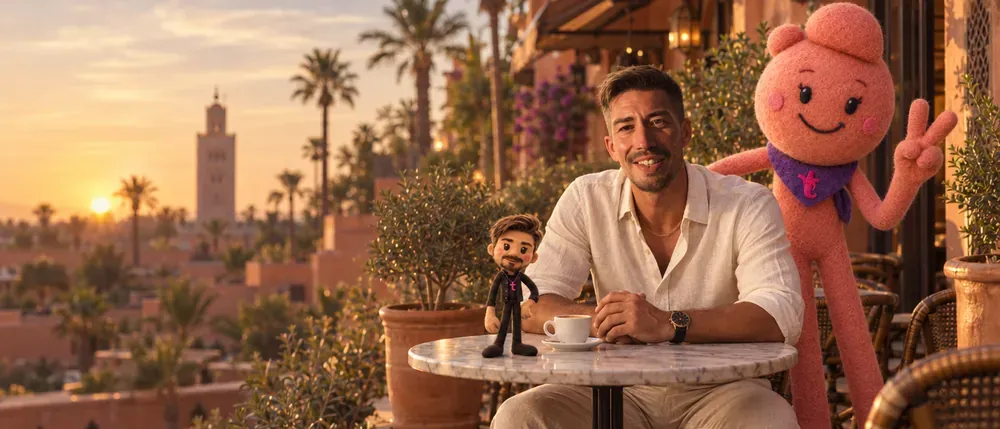
I founded Lafter in Marrakech, a circle where you see the same faces every week. I write these texts like a reporter: a question that concerns me, the studies that answer it, and my own story when it helps. Every figure is sourced.
My story and the method →
Wherever you live in Marrakech, Tuesday 8pm.
The Lafter Coffee: a table composed by affinity, in a partner café. Free to discover, no commitment.
Save my seat